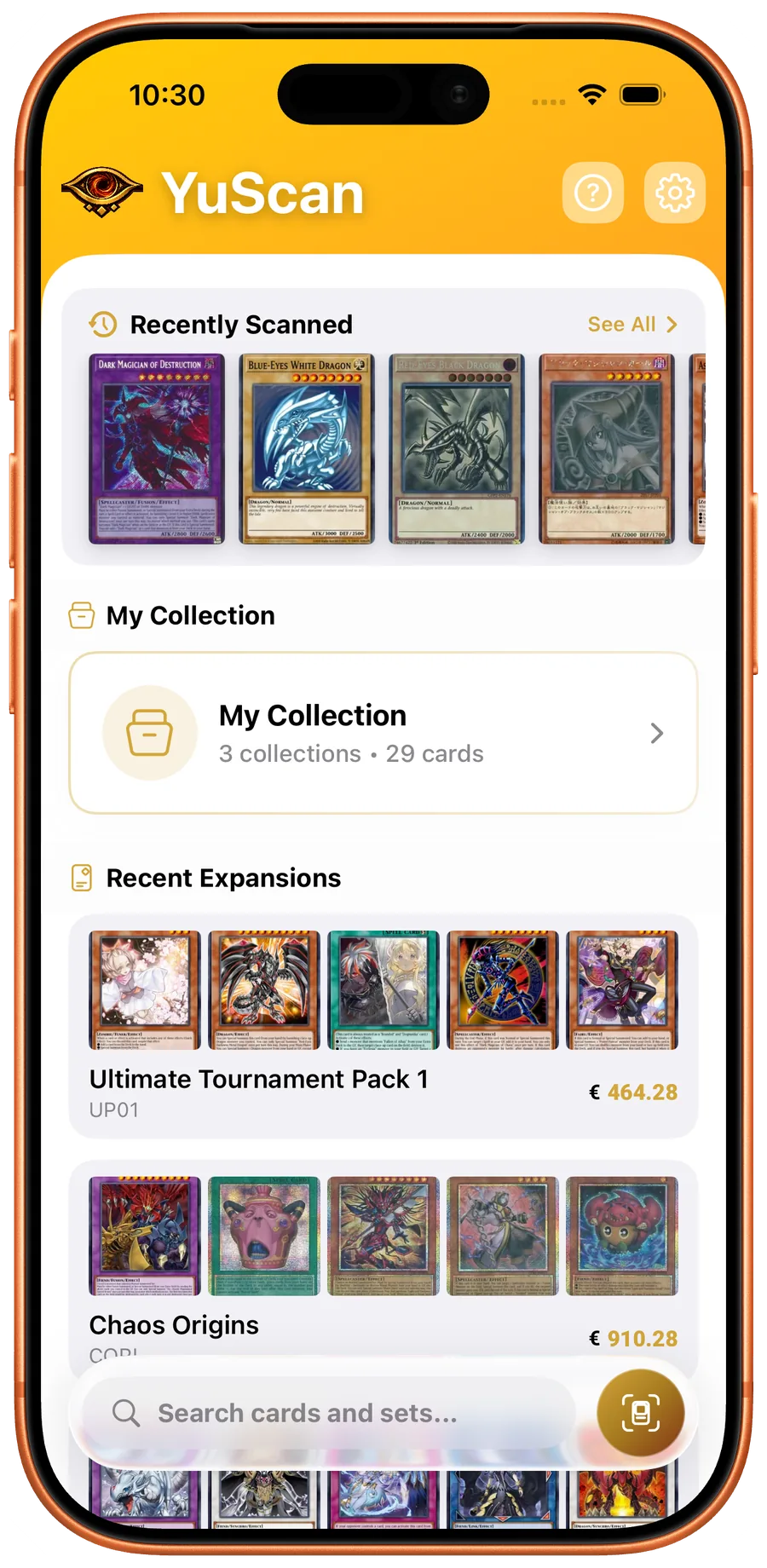
Every card. Always current.
Card Database
A comprehensive database with every Yu-Gi-Oh! card ever printed, updated daily. Automatic sync and complete offline access.
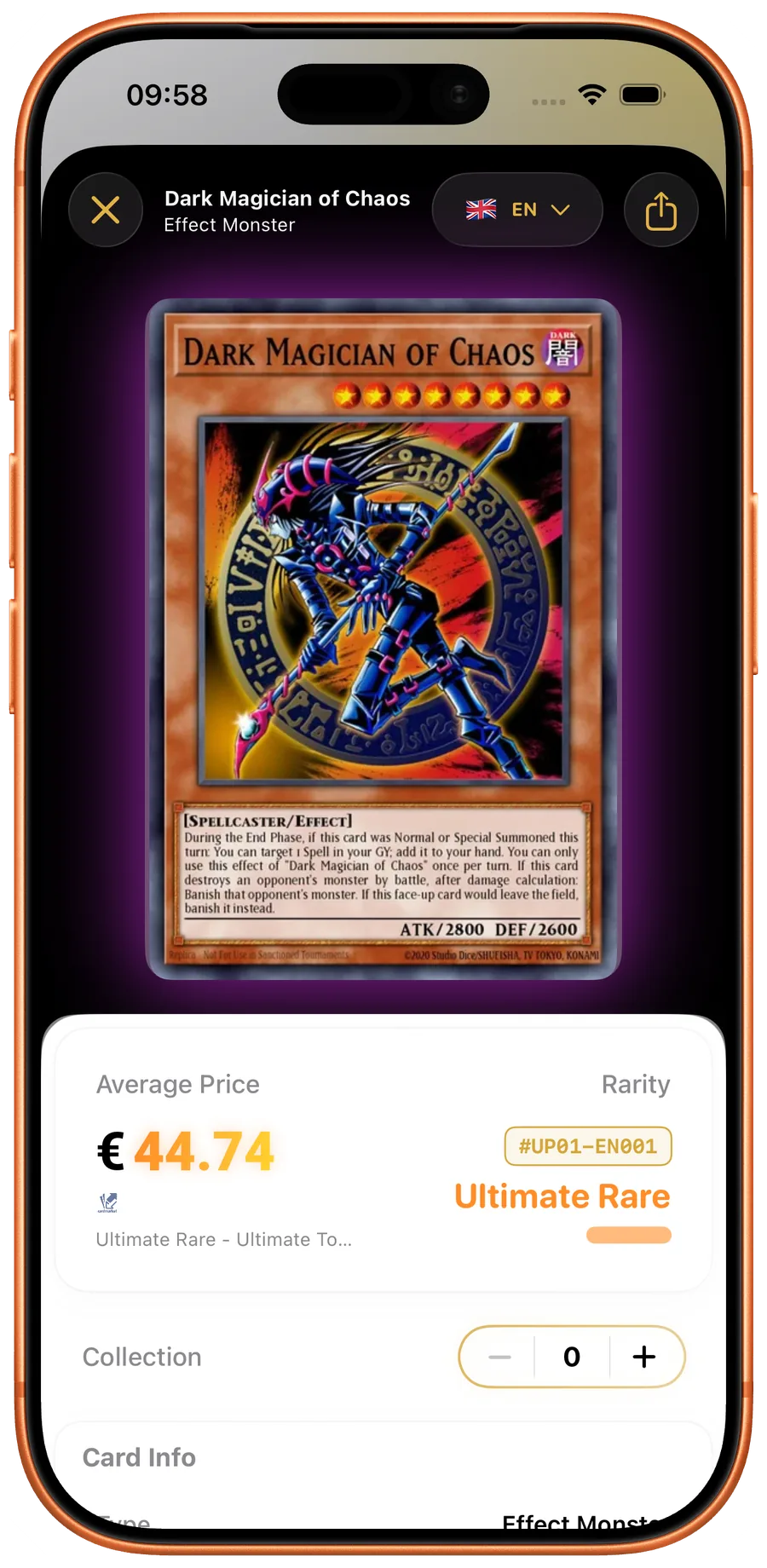
A Yu-Gi-Oh! card database is the structured index of every card ever printed — name, effect text, attribute, type, level, ATK and DEF, archetype, ban-list status, plus every set, set code, rarity, and edition the card has appeared in. YuScan ships with the complete database on-device, refreshed daily, and accessible without an internet connection. The same data feeds the scanner, the deck builder, the collection tracker, and the public website at yuscantcg.com.
Coverage spans the full TCG and OCG release history. Every printing back to the original Legend of Blue-Eyes White Dragon (2002) is indexed, including alternate art variants, World Championship promos, Duel Terminal foils, sneak peeks, and tournament participation cards. New releases are added within 24 hours of their official Konami publication and propagated to every device on the next sync.
The database is the foundation that everything else in YuScan rests on. Without an accurate, comprehensive, daily-refreshed database, the scanner would misidentify cards, the deck builder would validate against stale ban lists, and collection values would drift. Investment in the data pipeline is the unglamorous work that makes the user-facing features actually work.
See YuScan in action
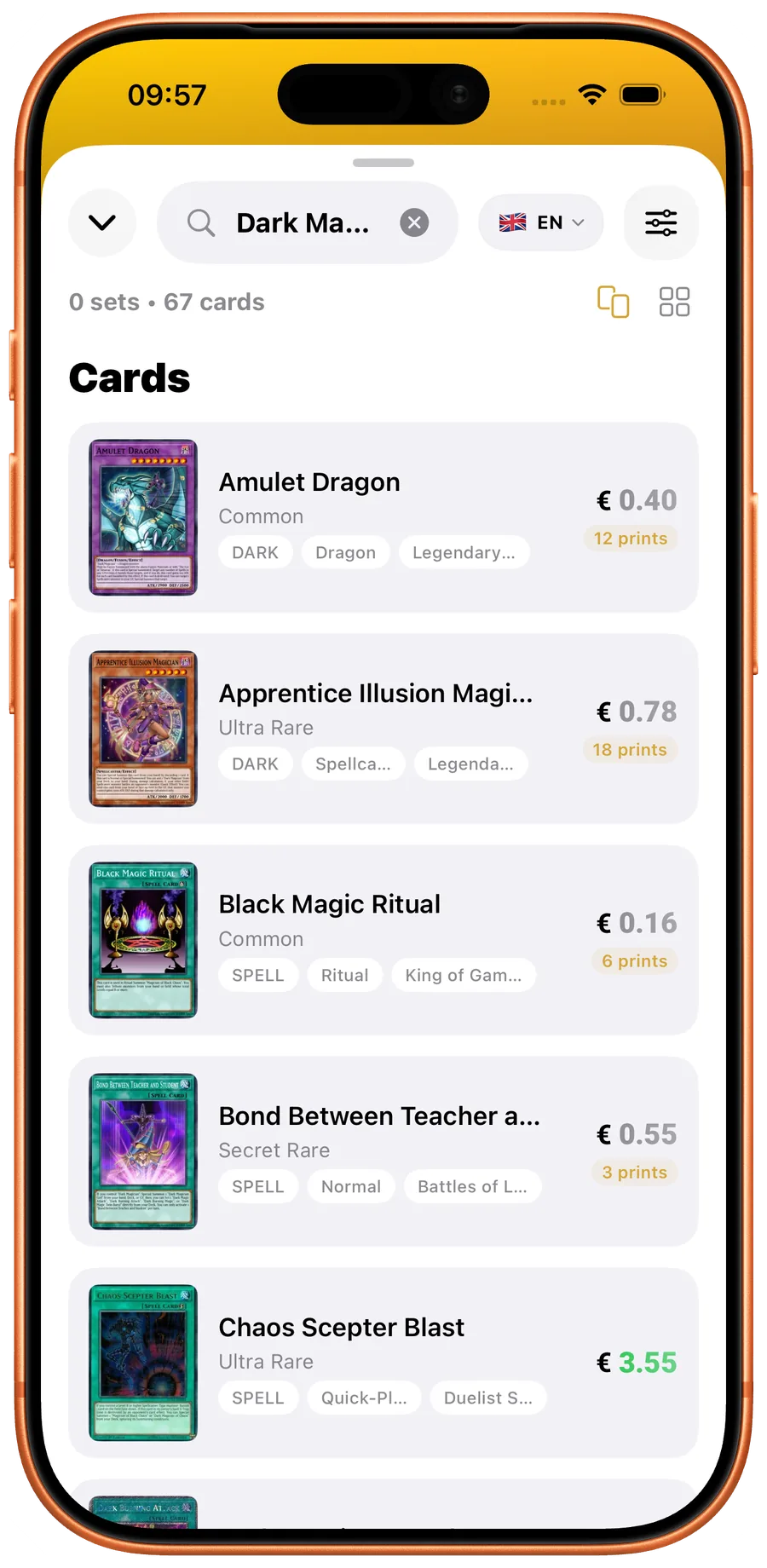
45,000+ Printings
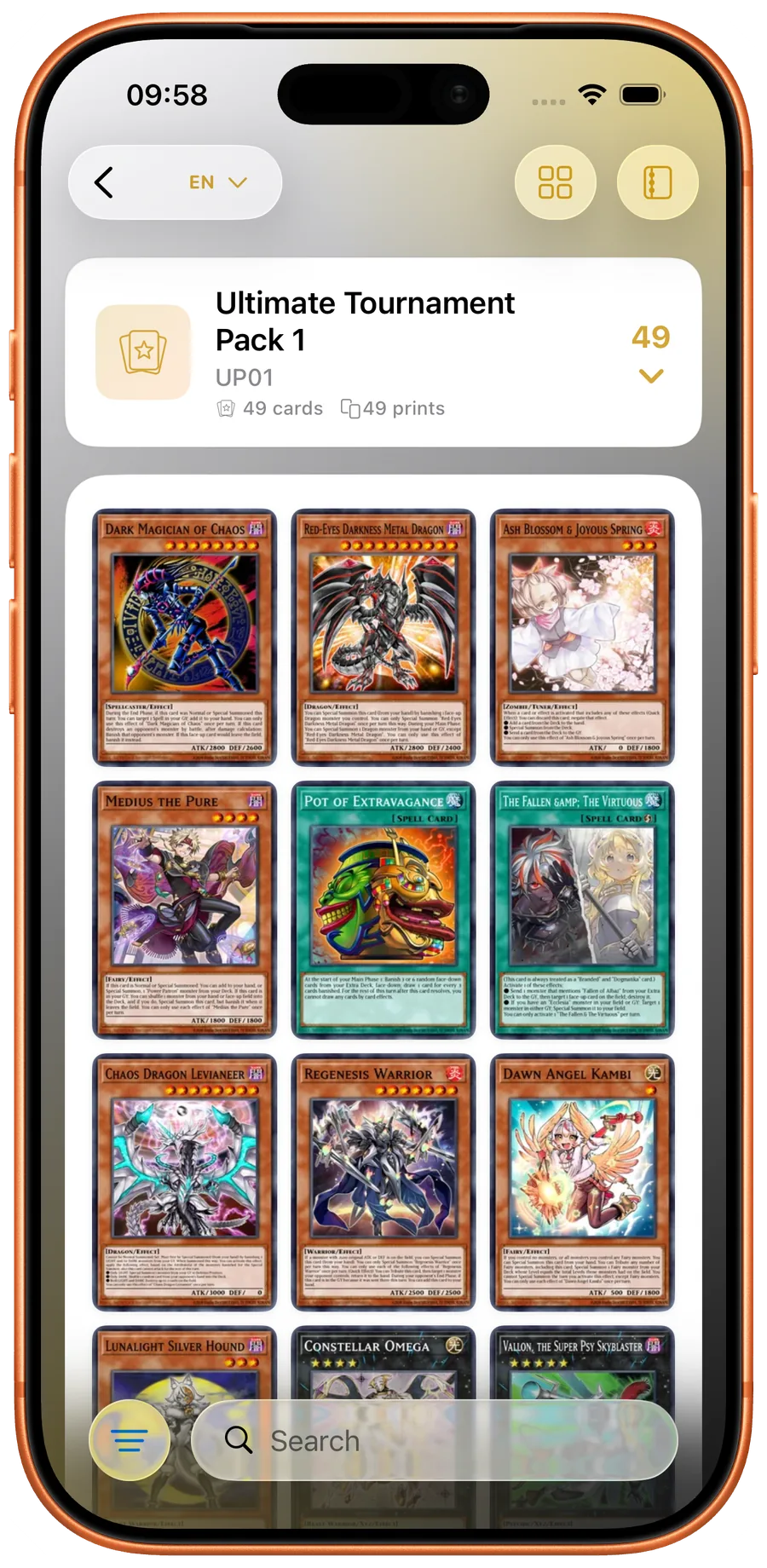
Every Yu-Gi-Oh! card across every expansion, structure deck, and promotional release. Including set codes, rarities, and multiple artwork variants.
Daily Updates
Card data is refreshed daily from multiple sources. New cards appear within 24 hours of release.
Offline-First
The complete database is stored on your device. Search, browse, and manage your collection without any internet connection.
Five Languages
Card names and descriptions available in English, French, German, Italian, and Portuguese with per-card language support.
Secure Delivery
Database updates are compressed and delivered securely to your device. Fast downloads that use minimal bandwidth.
Low Storage Footprint
Intelligent compression keeps the full database under 30 MB on your device. Automatic warnings if storage runs low.
How the YuScan Yu-Gi-Oh! database works
The database is built by aggregating, deduplicating, and cross-referencing several authoritative public sources. Card metadata (effect text, attribute, type, level, ATK and DEF, archetype, ban-list status) starts from the open YGOPRODeck dataset. Printing-level data — set codes, rarities, alternate arts, 1st Edition versus Unlimited variants — is matched against marketplace listings from TCGPlayer and Cardmarket so that every printing in the database corresponds to a real product a player can actually buy.
Updates are continuous on the server side and daily on the device side. The server-side pipeline reconciles new releases, banlist revisions, and pricing changes hour by hour. Each user device syncs once per day (or on demand) by downloading a compressed delta — typically a few hundred kilobytes — and merging it into the local database. The full initial database download is under 30 MB compressed; subsequent updates are an order of magnitude smaller.
Multilingual data is first-class. Every card carries its name and effect text in English, French, German, Italian, Portuguese, and Spanish where Konami has published an official translation. The scanner is language-agnostic (it matches artwork rather than text), so a German player scanning a French card sees the result in their preferred display language without having to switch settings.
When to use the YuScan database
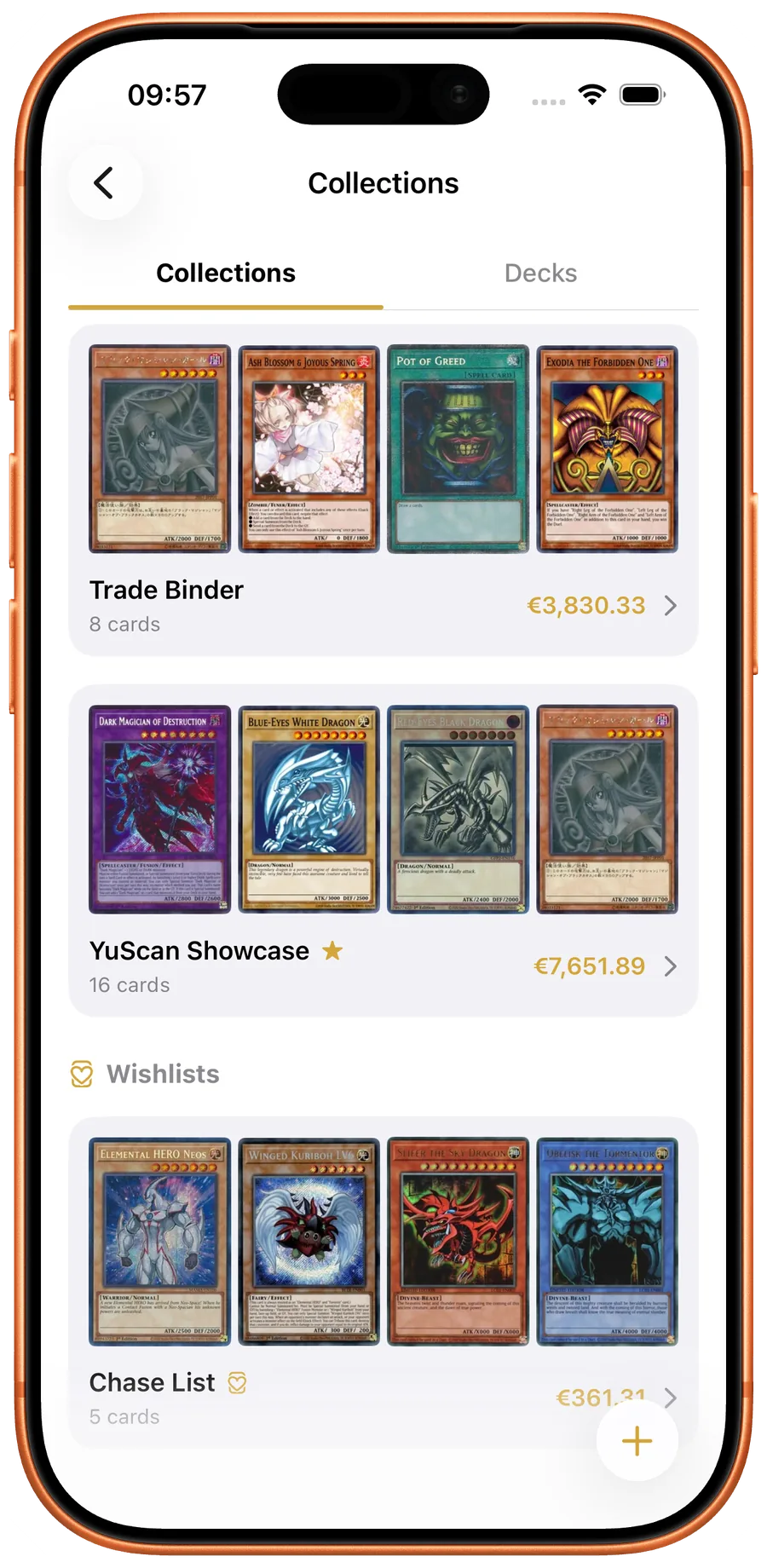
Use it as a reference whenever you need to confirm a card text, ban-list status, or printing detail. Tournament players double-check rulings against the database mid-game. Collectors verify whether a card they were offered is actually a 1st Edition or an Unlimited reprint. Returning players use the archetype browser to discover what new families exist in the seven years they were away.
Use the offline access when connectivity is unreliable. Locals at a card shop with a broken router, regionals in a basement convention hall, packed events where mobile data crawls — all the places where you most need the database are exactly the places where you cannot rely on the network. YuScan ships the full dataset on-device for this reason.
Use the website mirror at yuscantcg.com when you are at a desktop. Every card, archetype, and expansion has a permanent URL with the same data the app shows, so you can link to a card in a Discord channel or a deck-tech article and the link is stable.